Identifying Red Flags During Post-Surgical Healing You Should Never Ignore
March 24, 2026
The Vital Role of Post-Surgery Education in Your Recovery
March 25, 2026

Welcome to a Smoother Recovery Journey
Successful recovery begins long before the operating room. Preparing at home—stocking soft foods, electrolyte drinks, and prescribed meds; arranging easy‑to‑remove clothing; and setting up a quiet, clutter‑free space—reduces stress and lets the body focus on healing. Professional support, from a surgeon’s team to therapists who offer lymphatic drainage, compression garment fitting, and post‑operative nursing, provides guidance, detection of complications, and adjustments that keep women safe and confident. Integrating evidence‑based practices such as gentle ambulation, cold‑compress therapy, adequate hydration, a protein‑rich low‑sodium diet, and scheduled lymphatic massage amplifies circulation, curbs edema, and accelerates tissue repair. Together, these steps create a roadmap toward a smoother, healthier recovery. By honoring these fundamentals, women can reclaim comfort, confidence, and results throughout the healing process.
Step 1 – Comprehensive Pre‑ and Post‑Op Checklists
A thorough plastic‑surgery checklist begins with medical clearance, a medication review (stopping blood‑thinners, vitamins, herbs, and smoking), and fasting instructions. Arrange a trusted driver and a recovery companion for the first night, and pack an overnight bag with ID, insurance paperwork, loose front‑button clothing, slip‑on shoes, and any prescribed meds. Arrive on time, wear only easy‑to‑remove attire, and bring a container for glasses or contacts.
After surgery, keep incisions clean, apply prescribed ointments, and monitor for infection. Elevate the treated area, wear compression garments or stockings as directed, and begin gentle ambulation and deep‑breathing exercises as soon as approved. Schedule a professional lymphatic drainage massage within the first week to boost circulation and reduce edema. Avoid heavy lifting, vigorous exercise, and prolonged sitting for 1–2 weeks; use a supportive chair with armrests and keep a bedside phone for quick contact with the surgical team.
Recovery time varies by procedure: minimally invasive treatments may need only 1–2 weeks of limited activity; breast augmentation, rhinoplasty, or brow lift typically allow light work in 3–10 days and full activities after 2–4 weeks. Major body‑contouring surgeries often require 4–6 weeks before vigorous exercise, with swelling resolving over several months. Individual health, age, and adherence to post‑op care can shorten or lengthen these timelines.
Step 2 – Core Post‑Op Care and Nursing Guidance
After a cosmetic procedure the first priority is meticulous incision management. Keep the dressing dry and intact for the initial 48 hours, then gently cleanse the site with mild soap and apply a thin layer of bacitracin ointment twice daily. Follow your surgeon’s prescription for pain medication—prefer acetaminophen or ibuprofen when appropriate, and reserve opioids for breakthrough pain. Ice packs should never touch the skin directly; wrap them in a cloth and limit each session to 15‑20 minutes to control swelling. Compression garments or elastic bandages, worn as instructed, support the new contours and promote lymphatic drainage.
Professional nursing support reinforces these steps. Nurses monitor incision sites, drains, and vital signs, promptly identifying signs of infection or complications. They manage medication schedules, educate on side‑effects, and assist with dressing changes, safe mobility, and nutrition. Certified therapists may provide gentle lymphatic drainage massage to accelerate fluid removal and reduce bruising.
Pink & Fancy offers a personalized post‑op program that blends clinical expertise with spa‑like comfort, delivering tailored nutrition, compression‑garment fitting, and ongoing check‑ins to ensure a smooth, accelerated healing journey.
Step 3 – Managing Swelling and Reducing Edema

Cold therapy & elevation: Apply a cold compress or ice pack wrapped in a cloth for 10‑15 minutes every hour during the first 24‑48 hours, then switch to a cool, damp cloth. Keep the head elevated with pillows or a wedge while lying down to promote venous return and limit fluid buildup.
When swelling signals a problem: Normal postoperative swelling peaks within the first 48‑72 hours and then slowly subsides. Seek medical attention if swelling worsens after day 3‑5, is accompanied by fever, increasing pain, warmth, redness spreading beyond the incision, sudden tightness, shortness of breath, chest pain, or foul‑smelling drainage. Persistent firm or painful swelling at four weeks should also be evaluated.
Natural and professional remedies: Gentle manual lymphatic drainage massage, started after surgeon clearance, moves excess fluid toward functional lymph nodes, reducing edema and inflammation. Herbal compresses (chamomile, aloe‑vera), anti‑inflammatory teas (turmeric, ginger), arnica or bromelain supplements, and a low‑sodium, protein‑rich diet support healing. Compression garments or facial wraps provide uniform pressure, while staying well‑hydrated and rested enhances lymphatic flow.
Lymphatic drainage benefits: It accelerates fluid removal, eases bruising, improves circulation, and supports immune function, leading to faster recovery and less pain for women after cosmetic or reconstructive surgery.
Is lymphatic drainage good after surgery? Yes—when performed by a qualified therapist after surgeon clearance, it gently clears protein‑rich fluid, reduces swelling, eases motion, and lowers the risk of lymphedema, as shown in clinical studies and integrated in Pink & Fancy’s post‑operative care.
Step 4 – Optimizing Nutrition, Hydration, and Supplements
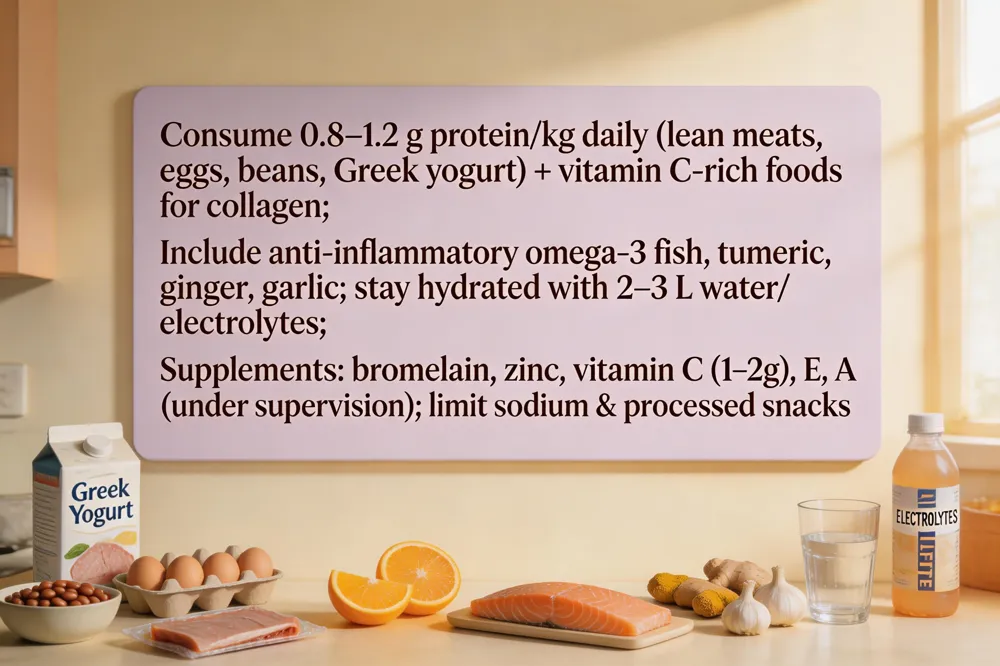
A balanced post‑operative diet is the backbone of a smooth recovery. Aim for 0.8–1.2 g of high‑quality protein per kilogram of body weight each day—think lean meats, eggs, beans, and Greek yogurt—to fuel collagen synthesis and tissue repair. Pair protein with vitamin‑rich foods: citrus fruits, berries, leafy greens, and bell peppers supply vitamin C, a powerful antioxidant that supports collagen formation and reduces inflammation. Vitamin E and vitamin A, when taken under a clinician’s guidance, further protect cell membranes and strengthen incisions.
Anti‑inflammatory foods such as fatty fish (omega‑3s), turmeric, ginger, and garlic help keep swelling in check. Limit sodium and processed snacks to prevent fluid retention, and stay well‑hydrated with 2–3 L of water or electrolyte‑rich drinks (e.g., Gatorade, coconut water) throughout the day.
Supplements for swelling control include bromelain (pineapple enzyme) and zinc, both shown to lessen bruising and support immune function. Arnica gel or tablets can also be used topically or orally for mild inflammation.
Vitamins to reduce swelling after surgery: Vitamin C (1–2 g daily), vitamin E, vitamin A (with medical oversight), bromelain, and zinc.
How can I speed up healing after plastic surgery? Follow your surgeon’s after‑care plan, stay hydrated, eat a protein‑ and vitamin‑C dietrich routine gentle walk, schedule lymphatic drainage massage at Pink & Fancy, and avoid smoking, vaping, and alcohol.
Natural remedies for swelling after surgery: Cold compresses (15‑minute intervals), gentle lymphatic drainage massage, chamomile or aloe‑vera compresses, turmeric/ginger tea, arnica gel, bromelain‑rich pineapple, and a diet rich in omega‑3s, berries, leafy greens, and magnesium‑dense foods.
Step 5 – Activity, Rest, and Lifestyle Choices
Gentle ambulation is essential; start with short walks, ankle wiggles, and light calf‑pump exercises within the first 24‑48 hours to boost circulation and prevent clots without stressing incisions. Sleep and stress management matter—aim for 7‑9 hours of quality rest, keep your head elevated with pillows, and practice diaphragmatic breathing to enhance lymphatic flow and reduce cortisol‑driven inflammation. Avoid harmful substances: quit smoking, limit alcohol, and steer clear of blood‑thinning supplements (e.g., ibuprofen) unless your surgeon approves.
How to speed up facelift recovery – Follow your surgeon’s post‑op plan, keep your head elevated while sleeping, apply cold compresses for the first 48‑72 hours, and eat a low‑sodium, protein‑rich diet rich in vitamin C and zinc. Stay well‑hydrated, avoid smoking and alcohol, limit strenuous activity for two weeks, and schedule lymphatic drainage massage at Pink & Fancy. Protect healed skin with high‑SPF sunscreen.
Fastest way to reduce facial swelling after surgery – Use ice packs or cold compresses for 10‑15 minutes each hour during the first 48 hours, then switch to a cool, damp cloth. Elevate your head, stay hydrated, follow a low‑sodium diet, begin lymphatic drainage massage within 48‑72 hours, and avoid heat, vigorous activity, and NSAIDs unless prescribed.
How to improve lymphatic drainage in legs – Perform self‑massage from ankle to thigh, repeat 5‑10 times twice daily, combine with deep‑breathing, engage in low‑impact walking or seated marching, wear fitted compression stockings, stay hydrated, and maintain good posture.
Lymphatic drainage exercises – Start with diaphragmatic breathing (10 repetitions), then do shoulder rolls, seated marching, butt‑squeeze contractions, calf raises with overhead reach, side‑step arm sweeps, and light hops. Perform each movement ten repetitions twice a day while wearing any prescribed compression garments.
Step 6 – Specialized Post‑Surgical Care at Pink & Fancy

Pink & Fancy in San Jose, CA blends clinical expertise with personalized wellness. The boutique is led by an OR nurse with more than 25 years of surgical experience and specialized training in lymphedema, offering manual lymphatic drainage, scar‑management, body‑contouring, wood therapy, and cellulite treatments. Services are designed to reduce post‑operative swelling, accelerate tissue repair, and prevent fibrosis while providing a calming, women‑focused environment.
Celebrity‑style recovery – High‑profile patients rely on board‑certified surgeons, a dedicated post‑op nursing team, and routine lymphatic drainage massages. Their recovery kits often include protein‑rich meals, electrolyte drinks, low‑sodium diets, and, when medically appropriate, short courses of oral steroids or vitamin K to curb bruising. Ample time off work and strict adherence to activity restrictions allow the body to heal without stress, compressing the typical timeline.
Finding professional lymphatic massage – Pink & Fancy’s licensed therapists perform evidence‑based, gentle lymphatic drainage tailored to each patient’s surgery and healing stage. Appointments can be booked online or by phone, and the clinic accepts most major insurance plans for post‑surgery therapy. For those outside the San Jose area, comparable services are available at Davis Facial Plastic Surgery in Tampa, FL, and Touch of Beauty’s post‑op lymphatic packages.
Quick answers –
- Post‑surgery care near me: Pink & Fancy provides comprehensive post‑op care for women, from swelling control to scar therapy.
- Lymphatic massage near me: The boutique offers professional lymphatic drainage performed by therapists with extensive surgical nursing backgrounds.
- How do celebrities recover so quickly?: They combine elite surgeons, intensive nursing support, regular lymphatic massage, strict nutrition, hydration, and prescribed anti‑inflammatory meds while avoiding stress and heavy activity.
- Fastest way to reduce facial swelling: Apply cold compresses 10‑15 min hourly for the first 48 hrs, keep the head elevated, stay well‑hydrated with a low‑sodium diet, begin gentle lymphatic massage within 48‑72 hrs, and avoid heat, strenuous exertion, and blood‑thinning supplements.
Step 7 – Long‑Term Wellness and Follow‑Up

Post‑surgery checklist
After surgery keep incisions clean, apply prescribed ointments, and monitor for infection. Elevate the treated area and wear compression garments as directed to limit swelling and prevent clots. Begin gentle ambulation and deep‑breathing exercises when cleared, and schedule a professional lymphatic drainage massage within the first week to boost circulation and detoxification. Avoid heavy lifting and intense exercise for 1–2 weeks, use a supportive chair with armrests, and keep a bedside phone for easy contact. Attend all follow‑up appointments, record any concerning symptoms, and adhere to the surgeon’s pain‑management plan.
Plastic surgery post‑op care
Keep dressings dry for the first 48 hours, then cleanse gently with mild soap and apply bacitracin twice daily. Follow prescribed pain meds, antibiotics, and icing protocols (never place ice directly on skin). Wear compression garments or bandages as instructed to support contours and promote fluid drainage. Light walking and certified lymphatic drainage massage enhance circulation; refrain from driving, smoking, and vigorous activity until cleared. Watch temperature, incision redness, and drainage, and contact the office promptly for fever, extreme pain, or abnormal swelling.
After cosmetic surgery care
Pink & Fancy offers a personalized post‑operative program that combines clinical expertise with spa‑like comfort. Patients receive gentle lymphatic drainage, targeted scar‑therapy, and a nutrition plan rich in protein, antioxidants, and electrolytes. Guided low‑impact movement and compression‑garment fitting are introduced at the optimal time, while ongoing check‑ins ensure smooth, accelerated healing and lasting results.
Your Path to a Confident, Restored Self
Recovering after cosmetic surgery is a journey that blends preparation with self‑care. First, review the surgeon’s pre‑op guide and keep the home stocked with soft foods, electrolyte drinks and prescribed meds so you can rest without trips. Wear loose, front‑buttoned clothing on surgery day to protect incisions, and keep a phone nearby for communication with the surgical team. Short walks and ankle wiggles boost circulation, while cold packs and head elevation lessen swelling. Eat a balanced diet rich in protein, vitamin C and zinc, and stay hydrated. When cleared, consider lymphatic drainage massage and compression garments to accelerate fluid removal. Finally, stay in touch with your surgeon, ask questions, and trust that consistent, personalized care will support lasting health and confidence.