Fluid Retention and Lymphatic Drainage: Surprising Causes Revealed
March 27, 2026
Why Rebuilding Confidence Matters
A woman’s sense of confidence after surgery is not just an aesthetic concern; it is a cornerstone of holistic recovery. When the body heals, the mind also needs reassurance that the new appearance can still be embraced with pride. Positive body image and self‑esteem act as catalysts for better sleep, reduced stress hormones, and faster tissue repair, creating a virtuous cycle of physical and emotional wellness. Structured post‑operative care—such as personalized lymphatic drainage massage, gentle wood‑therapy contouring, and tailored nutrition—helps minimize swelling, improve scar texture, and restore a smoother silhouette, all of which reinforce a more favorable self‑view. Equally important are mind‑body practices, supportive peer groups, and professional counseling that allow women to grieve the loss of their pre‑surgery look, celebrate resilience, and set realistic milestones. Together, these elements transform recovery into a comprehensive journey that restores both body function and confidence.
Physical Foundations – Rest, Nutrition, and Safe Activity
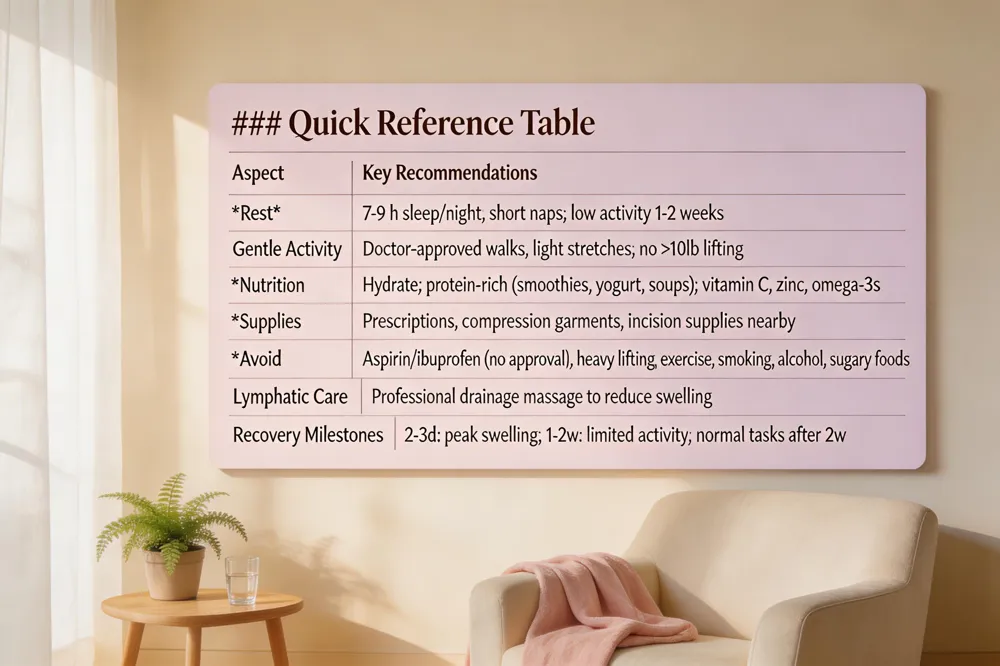
Resting after surgery – Prioritize 7‑9 hours of uninterrupted sleep each night and allow short naps when fatigued. Keep activity low for the first 1‑2 weeks, but incorporate gentle, doctor‑approved walks or light stretching to maintain circulation and prevent clots. Professional lymphatic drainage massage can further reduce swelling while you rest.
Post‑surgery essentials – Keep prescriptions, compression garments, and incision supplies within easy reach. Stay hydrated and choose protein‑rich, easy‑to‑digest foods such as smoothies, yogurt, and soft soups. Use hand sanitizer frequently, dress in loose breathable clothing, and enlist a trusted support network for light chores and emotional encouragement.
How long to rest – Most patients need at least 1‑2 weeks of limited activity before gradually resuming normal tasks. Avoid lifting >10 lb, strenuous exercise, and heavy chores during this period. Lymphatic drainage massage and gentle movement can accelerate the transition from rest to active wellness.
Cosmetic surgery side effects – Expect swelling, bruising, pain, temporary numbness, and possible fluid collections (seroma, hematoma). Lymphatic drainage massage helps move fluid, reduces edema, and supports faster healing.
What to avoid – Do not take aspirin, ibuprofen, or other blood‑thinners without surgeon approval. Avoid heavy lifting, vigorous exercise, smoking, alcohol, and processed sugary foods that increase inflammation. Keep incisions dry and follow wound‑care instructions.
Worst day after surgery – The 2nd‑3rd day often brings peak swelling and discomfort. Gentle lymphatic massage, prescribed pain medication, hydration, and short walks can mitigate symptoms. Listen to your body and contact your provider if pain worsens.
Facts about cosmetic surgery – Elective procedures aim to improve appearance and self‑esteem but carry risks such as infection, scarring, and anesthesia complications. Realistic expectations, stable weight, and adherence to pre‑/post‑operative guidelines improve outcomes.
Types of plastic surgery – Cosmetic (facelifts, rhinoplasty, breast augmentation, liposuction), reconstructive (breast reconstruction, facial repair), and body‑contouring (brachioplasty, thigh lift). All generate swelling, making specialized lymphatic care essential.
Emotional Resilience – Mood, Support, and Mind‑Body Practices
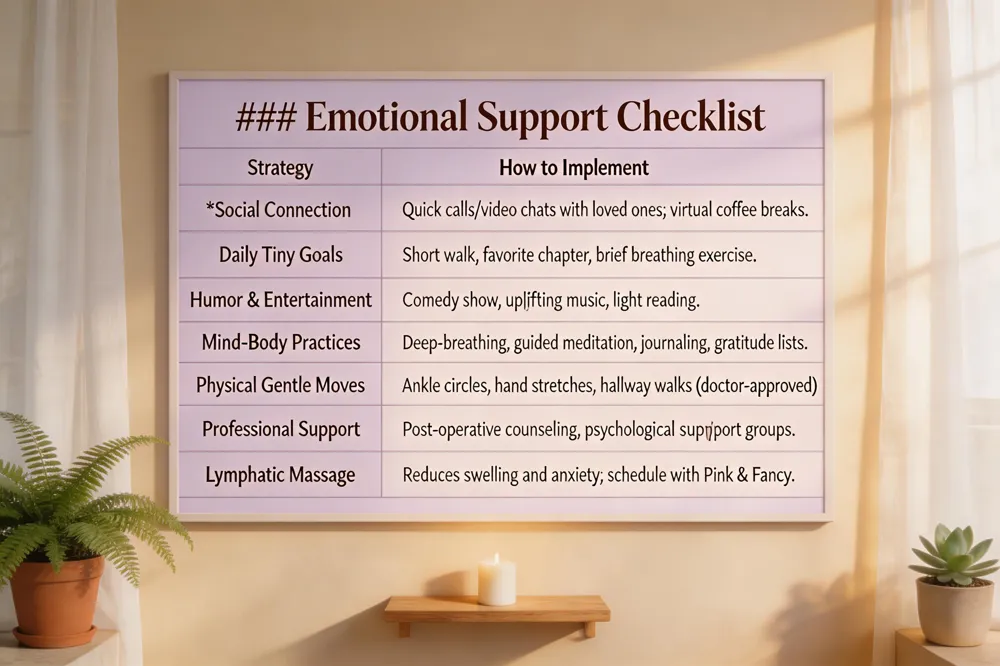
After surgery, lift your spirits by staying connected with loved ones through quick calls or video chats, stepping outside for fresh air, and setting tiny daily goals—like a short walk, a favorite chapter, or a brief breathing exercise. Light humor, music, or a comedy show can trigger endorphins, while a gentle lymphatic drainage massage at Pink & Fancy eases swelling and anxiety.
To avoid feeling “stir‑crazy,” schedule short virtual coffee breaks, play uplifting podcasts, and practice daily deep‑breathing or guided meditation. Doctor‑approved moves—ankle circles, hand stretches, brief hallway walks—keep circulation flowing. Journaling or a favorite hobby gives purpose while you heal.
Cosmetic surgery can boost self‑esteem in young adults, but those with pre‑existing anxiety, depression, or body‑dysmorphic concerns risk postoperative disappointment. Realistic expectations, psychological screening, and post‑operative counseling are essential to sustain benefits.
Depression after surgery often stems from unmet expectations, pain, and limited mobility. Early counseling, realistic goal‑setting, and supportive therapies—especially lymphatic drainage and gentle contouring—help restore mood.
Mastectomy recovery begins with naming emotions, joining support groups, and using body‑positive therapies like lymphatic massage to reclaim bodily confidence. Compassionate, personalized care at Pink & Fancy integrates physical healing with emotional resilience, fostering a healthier self‑concept.
Rebuilding Body Confidence – Mindset, Self‑Image, and Practical Steps
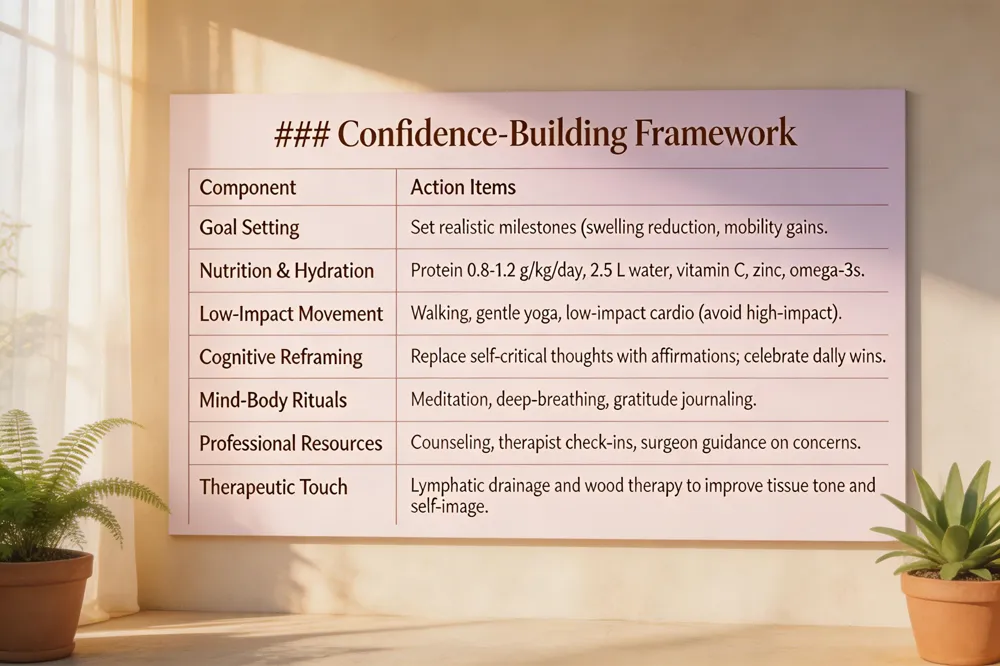
Regaining body confidence begins with a clear picture of how your surgery will heal. Set gentle, realistic goals and track milestones such as reduced swelling or increased mobility. Nourish your body with protein‑rich foods, plenty of water, and low‑impact movement like walking or gentle yoga to cut inflammation and boost circulation. Practice cognitive reframing: replace self‑critical thoughts with positive affirmations and celebrate what your body can already do. Daily mind‑body rituals—meditation, deep‑breathing, or gratitude journaling—keep you present and calm.
Higher self‑esteem and a positive body image are linked to more realistic expectations and greater post‑operative satisfaction. While a boost in confidence often follows cosmetic surgery, lasting self‑esteem requires counseling, realistic goals, and continued care. To stop overthinking, use grounding breathing techniques, visualize a smooth recovery, and follow a concrete pre‑op checklist; discuss any lingering worries with your surgeon or therapist.
Surgery does change your body, but personalized lymphatic drainage, wood therapy, and supportive counseling at Pink & Fancy can reduce edema, improve tissue tone, and reinforce a loving relationship with your new self. Embracing these holistic steps transforms “never the same” into a renewed sense of strength and wellness.
Lymphatic Therapy and Integrated Wellness
Lymphatic Drainage Massage
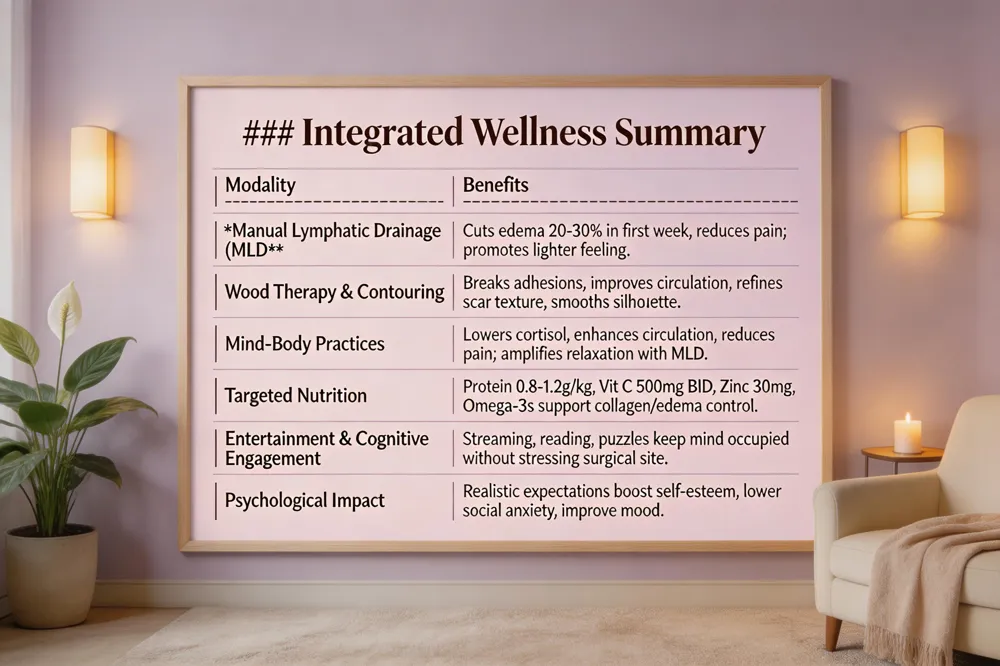
Lymphatic drainage (MLD) moves fluid, cuts edema by 20‑30 % in the first week and eases discomfort, helping women feel lighter. Sessions at Pink & Fancy complement surgeon instructions and speed healing.
Wood Therapy & Contouring
Wood therapy breaks adhesions, improves circulation and refines scar texture. Paired with contouring it creates smoother silhouettes and supports a positive image.
Mind‑Body Practices
Meditation, deep breathing and guided visualization lower cortisol, improve circulation and reduce pain. Meditation alongside a lymphatic session amplifies relaxation and empowers patients.
Nutrition for Healing
Protein 0.8‑1.2 g/kg/day, vitamin C 500 mg twice daily, zinc 30 mg and omega‑3s aid collagen synthesis and edema control. Drinking 2.5 L of water keeps lymph flow optimal.
Surgery Recovery Entertainment
Streaming a favorite series, light reading, adult coloring or puzzles keep the mind engaged without stressing surgical site. Breathing breaks and a themed movie night with family add relaxation and social connection, supporting care.
Psychological Benefits of Plastic Surgery
Realistic expectations help patients report higher self‑esteem, less social anxiety and improved mood. Relief from discomfort and control over appearance foster lasting resilience when post‑operative support is compassionate.
Long‑Term Wellness and Lifestyle Integration
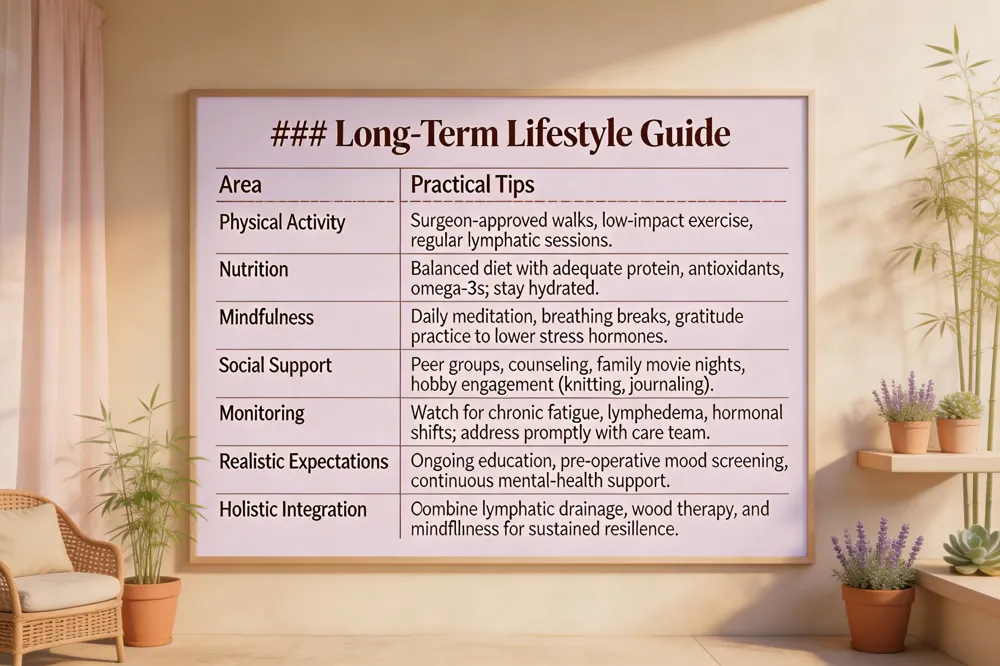
Life after breast cancer or major surgery can feel different, yet many survivors create a fulfilling “new normal” by weaving gentle hobbies, supportive care, and realistic expectations into daily routines. Light entertainment—knitting, journaling, streaming educational videos, or short, surgeon‑approved walks—breaks monotony and combats the boredom often reported on forums like Reddit. Long‑term side effects such as chronic fatigue, lymphedema, or hormonal shifts are common, but they can be managed with regular lymphatic drainage, low‑impact exercise, balanced nutrition, and mindfulness practices that lower stress hormones. Future outlook after breast cancer is optimistic when patients engage in post‑operative counseling, peer support groups, and personalized wellness plans that celebrate the body’s resilience and function. A mastectomy may initially challenge a woman’s feminine self‑concept, leading to delayed body‑image concerns and depressive symptoms; compassionate counseling combined with lymphatic therapies and body‑focused treatments can restore confidence and femininity. When expectations are realistic, cosmetic and reconstructive surgery often boost self‑esteem, reduce social anxiety, and empower patients, but pre‑existing mood disorders require careful screening and ongoing mental‑health support to sustain these benefits.
Moving Forward with Confidence
A holistic post‑operative plan begins with gentle movement, balanced nutrition, and adequate hydration to support tissue repair and lymph flow. Walking 10‑15 minutes twice daily, low‑impact yoga, and core‑strengthening exercises improve circulation, reduce edema, and release endorphins that lift mood. Integrating lymphatic care—regular manual lymphatic drainage massage, wood therapy, and compression garments—has been shown to cut swelling by up to 30 % and accelerate scar remodeling, helping women feel lighter and more comfortable in their bodies sooner. Sustaining self‑esteem involves celebrating small milestones, practicing self‑compassion, and engaging in mind‑body practices such as guided meditation or gratitude journaling. Peer support groups and counseling provide reassurance and shared coping strategies, while personalized styling choices reinforce a positive self‑image. Together, these evidence‑based elements create a supportive recovery ecosystem that nurtures both physical healing and lasting confidence.