How Compression Garments Can Transform Your Recovery Experience
April 5, 2026
Fibrosis Therapy: Can It Improve Your Post-Surgical Results?
April 5, 2026

Why Myth‑Busting Matters for Your Healing Journey
Lymphatic drainage has surged in popularity as a soothing adjunct to post‑operative care, especially in women‑focused wellness centers like Pink & Fancy. While gentle, light‑pressure strokes can reduce swelling, ease bruising, and promote a calm nervous system, many myths—such as the idea that the massage “detoxifies” the body or burns fat—can mislead patients and delay proper recovery. Relying on unverified claims may cause individuals to skip essential components of healing, such as compression garments, physician‑approved activity, and balanced nutrition. By grounding our approach in peer‑reviewed evidence, we ensure that each client receives safe, personalized treatment that supports lymphatic flow without risking complications like clot dislodgement or infection. Clear, factual information empowers women to make informed decisions, combines the real benefits of manual lymphatic drainage with the broader, evidence‑based post‑surgical plan that optimizes outcomes and overall wellness.
Myth 1 – Lymphatic Massage Is a Magic Weight‑Loss or Detox Solution

Manual lymphatic drainage (MLD) moves excess interstitial fluid toward functional lymph nodes, so any scale change after a session is a fluid shift—not fat loss. The resulting temporary water‑weight reduction can make a face, arms or abdomen look slimmer and less puffy, but it does not burn adipose tissue. Claims that MLD “detoxifies” the body or boosts immunity are overstated; the massage simply aids the lymphatic system’s natural waste transport, allowing the liver and kidneys to filter toxins more efficiently. In practice, women report reduced facial puffiness and a smoother skin tone after a series of gentle sessions, especially when paired with proper hydration, balanced nutrition and light exercise. While MLD can accelerate post‑surgical recovery and provide a soothing relaxation response, it should be performed by a certified therapist and used as a complement—not a replacement—for medical care and healthy lifestyle habits.
Myth 2 – Heavy, Deep‑Tissue Pressure Improves Lymph Flow

Deep‑tissue massage and Manual lymphatic drainage (MLD) are fundamentally different. Deep‑tissue work uses firm, sustained pressure to target muscle knots, whereas MLD employs very light, rhythmic strokes (often <30 g) that follow the natural direction of superficial lymph vessels. Because lymphatic vessels are shallow and valved, gentle pressure promotes their opening and guides fluid toward central nodes; heavy pressure can actually collapse capillaries and impede flow, worsening edema.
Clinical evidence consistently shows that MLD, not deep‑tissue massage, reduces post‑operative swelling and lymphedema. Studies of cosmetic and reconstructive surgery report a 30‑50 % reduction in edema when MLD is started within the first week, whereas deep‑tissue techniques provide no measurable benefit and may risk incision integrity.
Deep tissue lymphatic massage myths – Heavy pressure does not boost lymph drainage, cure lymphedema, or detoxify the body; any weight change is fluid loss, not fat loss.
Deep tissue post‑surgery myths – A single deep‑tissue session will not resolve swelling; regular, gentle MLD combined with compression and movement is required for safe recovery.
Is lymphatic drainage medicine real? – Yes. MLD is an evidence‑based therapeutic modality used by certified therapists to improve lymph flow, especially after cancer or cosmetic surgery, though it is not a cure‑all for detox or weight‑loss claims.
Myth 3 – Supplements, Capsules, and Drops Can Replace Real Lymphatic Work

Many brands sell “lymphatic‑drainage” pills, powders, or liquid drops that promise detox, better circulation, and quicker post‑surgical recovery. While these products exist, scientific research on their ability to move lymph fluid or reduce edema is essentially nonexistent. The only proven way to stimulate the lymphatic system is manual lymphatic drainage (MLD) performed by a certified therapist, especially for lymphedema or after cosmetic surgery. Supplements are generally low‑risk for healthy adults when taken as directed, but they can interact with medications or aggravate conditions such as kidney disease or blood‑thinning therapy. Therefore, they should be viewed as a complementary wellness aid, not a replacement for professional MLD, compression garments, gentle exercise, and adequate hydration. Women recovering from surgery are best served by a personalized care plan that prioritizes evidence‑based therapies over unproven oral products.
Myth 4 – You Can Start Lymphatic Massage Whenever You Want, and It’s Always Safe After Surgery
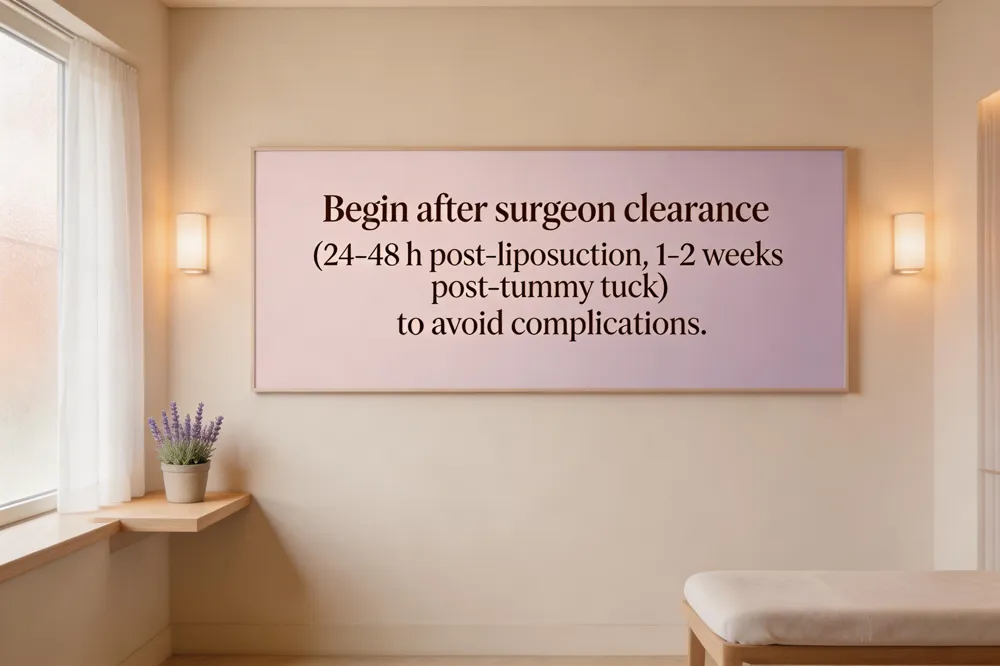
Timing after liposuction and tummy tuck – Most surgeons advise beginning manual lymphatic drainage (MLD) 24‑48 hours after liposuction once bandages are removed and you have physician clearance. Early, gentle sessions (30‑60 min) help move excess fluid, lessen bruising and reduce fibrosis. For a tummy tuck, wait until incisions are fully closed and drains are out, typically 1‑2 weeks post‑op, before starting light self‑massage or therapist‑guided manual lymphatic drainage (MLD).
Physician clearance and contraindications – Always obtain approval from your operating surgeon or a qualified clinician. Contraindications include active infection, deep‑vein thrombosis, uncontrolled heart or kidney disease, recent major surgery without clearance, and certain cancers.
Potential risks if done too early or incorrectly – Aggressive pressure can dislodge clots, spread infection, cause bruising, or worsen swelling. Improper technique may even trigger lymphedema in a vulnerable limb.
Home self‑massage after tummy tuck – Use fingertips to sweep from the abdomen’s center outward toward the groin and ribs, applying a soft caress (≈5/10 pressure) for 5‑10 minutes, 2‑3 times daily, while wearing your compression garment. Stop if pain, redness, or drainage occurs.
Safety near you – Facilities such as Pink & Fancy in San Jose, CA, offer certified, women‑focused post‑surgical lymphatic drainage performed by therapists with medical training, ensuring safe, personalized care.
Myth 5 – Lymphatic Massage Is Only for Medical Conditions, Not for Everyday Wellness

Manual lymphatic drainage (MLD) is not limited to treating disease; healthy people can reap everyday wellness benefits. Light, rhythmic strokes encourage fluid movement, which reduces mild edema, supports circulation, and promotes a calmer nervous system. For the face, MLD gently directs lymph toward cervical nodes, decreasing periorbital puffiness, smoothing skin texture, and giving a more luminous appearance; regular sessions help maintain a sculpted look and may lessen fine‑line visibility. The technique also aids skin tone and can temporarily diminish the grainy look of cellulite by clearing excess interstitial fluid. While lymphatic massage does not directly boost kidney filtration, it eases overall fluid load and inflammation, indirectly easing the kidneys’ workload and supporting immune surveillance. Certified therapists at Pink & Fancy tailor each treatment to the client’s stage of recovery or wellness goals, ensuring safe, personalized care that complements proper hydration, movement, and nutrition for overall vitality and lasting well‑being.
Myth 6 – Self‑Massage Is Easy, Safe, and Can Replace a Certified Therapist

Self‑lymphatic drainage is a gentle, light‑touch method that can support fluid balance when performed correctly, but it is not a substitute for a trained professional. Proper self‑massage technique – Begin after a warm shower, take a few deep breaths, and use the flat of your hands to lightly stretch the skin rather than press into muscle. Work from the periphery toward central lymph nodes: on the face, sweep from chin and cheeks toward the collarbone and under‑arm; on the neck, move toward the under‑arm and groin. Pressure should be so light you barely feel the skin moving, and the sequence can be repeated for a few minutes each day. When self‑massage is appropriate – It may be useful for mild, everyday fluid retention, for post‑operative swelling after surgeon clearance, or as a complement to hydration, exercise, and balanced nutrition. Avoid it if you have infection, active pain, deep‑vein thrombosis, or significant inflammation. Risks of improper practice – Excessive pressure can collapse superficial lymph capillaries, dislodge clots, or spread infection, leading to worsening swelling or tissue damage. Always stop if discomfort occurs and seek a certified therapist for chronic lymphedema or post‑surgical care. Self lymphatic drainage massage – Light strokes toward major nodes reduce swelling and promote detoxification. Lymphatic massage for weight loss at home – Helps reduce water retention; combine with diet, exercise, and deep breathing for best results. Self‑lymphatic drainage massage – Follow the gentle, periphery‑to‑center sequence daily, staying hydrated and listening to your body.
Putting the Facts Together – Your Path to Faster, Safer Healing
Let’s recap the six most‑heard myths: (1) MLD burns fat or causes rapid weight loss; (2) it “detoxifies” the body; (3) it can replace medical treatment for lymphedema; (4) deep‑tissue pressure is better; (5) anyone can safely self‑treat without training; and (6) it’s only for post‑op patients. Pink & Fancy blends evidence‑based manual lymphatic drainage into a personalized plan that starts after surgeon clearance, uses certified therapists, integrates compression garments and gentle movement, and tailors session frequency to your unique healing timeline. For optimal safety and results, always consult a qualified, certified therapist before beginning MLD.