Body Contour Massage vs Machine-Based Treatments: Pros and Cons
April 14, 2026
The Emotional Journey of Recovery After Cosmetic Procedures
April 14, 2026

Why Recovery Timelines Matter
Understanding recovery timelines helps patients set realistic expectations, avoid disappointment, and plan life events with confidence. Different surgical procedure types—ranging from minimally invasive liposuction, which often allows desk work within 5‑7 days, to more extensive body‑contouring or facial lifts that may require 2‑4 weeks off work—follow distinct healing phases. The first phase (0‑3 days) is dominated by swelling, bruising, and pain; gentle walking, head elevation, and compression garments reduce edema and promote lymphatic flow. The intermediate phase (1‑3 weeks) sees peak swelling subside and sutures removed, allowing light activities and return to work for many patients. The late phase (4‑12 weeks) focuses on tissue remodeling, scar maturation, and gradual resumption of vigorous exercise. By aligning personal schedules with these phases, women can prioritize self‑care, adhere to activity restrictions, and benefit from targeted therapies such as lymphatic drainage massage, ultimately supporting smoother, healthier recoveries.
General Principles for Faster Healing

Recovery after plastic surgery is a coordinated effort of nutrition, movement, and targeted therapies. Staying well‑hydrated (2‑3 L of water daily) and consuming a protein‑rich diet (1.2‑1.5 g per kg body weight) fuels collagen synthesis and immune response. Compression garments, worn as directed for at least six weeks control swelling, support tissues, and reduce discomfort. Light activity—such as short walks every hour—promotes circulation and prevents fluid buildup while protecting incisions. Manual lymphatic drainage massage, offered by Pink & Fancy a few days post‑op, uses gentle rhythmic strokes to stimulate lymph flow, decrease edema, and accelerate detoxification.
How can I speed up healing after plastic surgery?
Stay hydrated, eat protein‑rich foods, follow your surgeon’s compression‑garment protocol, begin gentle walking when safe, and schedule regular lymphatic drainage massages. Combine these habits with ample rest and stress‑reduction for a smoother recovery.
What are essential items on a plastic‑surgery recovery checklist?
Gather prescribed meds, compression garments, dressings, and drains before surgery; follow wound‑care and medication schedules; maintain a water‑ and protein‑focused diet while limiting sodium; start gentle movement and use cold compresses for the first 48 hours; arrange follow‑up appointments and lymphatic massage sessions; and enlist a support person for daily tasks and transportation until cleared.
Facial Surgery Swelling Dynamics
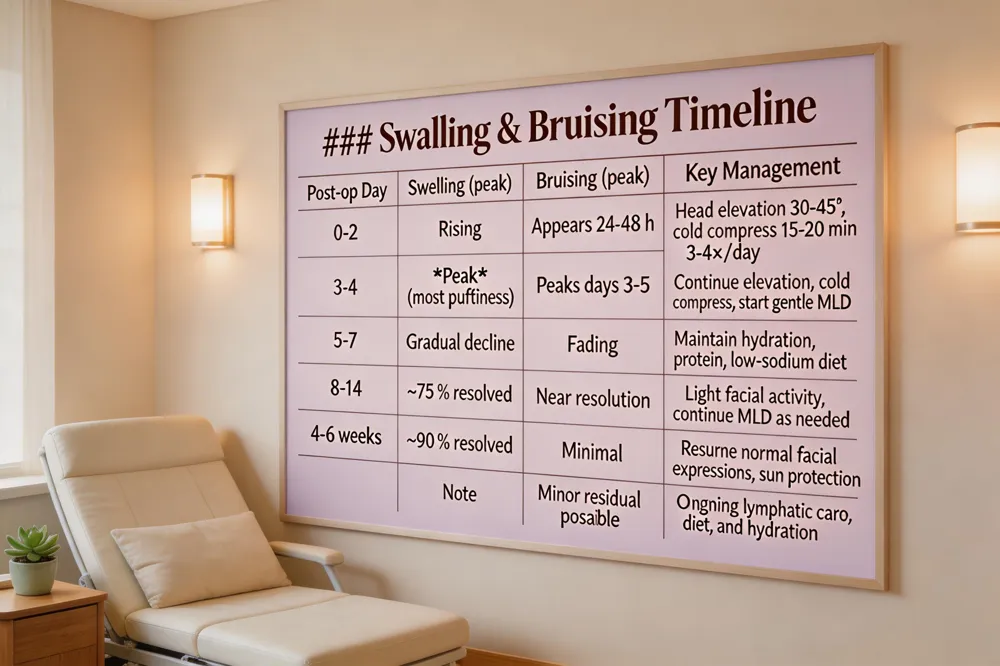
Swelling after facial surgery follows a predictable course. It usually peaks within the first week—most patients notice the greatest puffiness on days 3‑4, with some feeling the height of swelling as late as day 7. This early surge is caused by the body’s inflammatory response and is often accompanied by facial bruising that appears within 24‑48 hours, peaks around days 3‑5, and fades over the next 10‑14 days.
Key strategies to tame the edema include:
- Head elevation: sleep with the head 30‑45° elevated for the first 48‑72 hours to promote fluid drainage.
- Cold compresses: apply a cool pack (15‑20 minutes, several times a day) during the first three days to constrict vessels and reduce swelling.
- Lymphatic care: gentle manual lymphatic drainage massage, especially from specialists like Pink & Fancy, helps the lymphatic system clear excess fluid and can shorten the swelling phase.
When does swelling peak after facial surgery? The peak typically occurs on days 3‑4, with the face looking uneven and feeling heavy.
Why might swelling persist six months after a facelift? Ongoing lymphatic clearance, internal scar tissue blockages, and high‑sodium diet can trap fluid, especially around the jawline and neck. Targeted lymphatic massage and lifestyle tweaks aid final resolution.
When is swelling the worst after plastic surgery? The most pronounced swelling appears in the first few days, reaching a maximum around day 5‑7, then gradually subsides with about 75 % resolved by two weeks and 90 % by six weeks.
Facelift and Necklift Recovery Roadmap
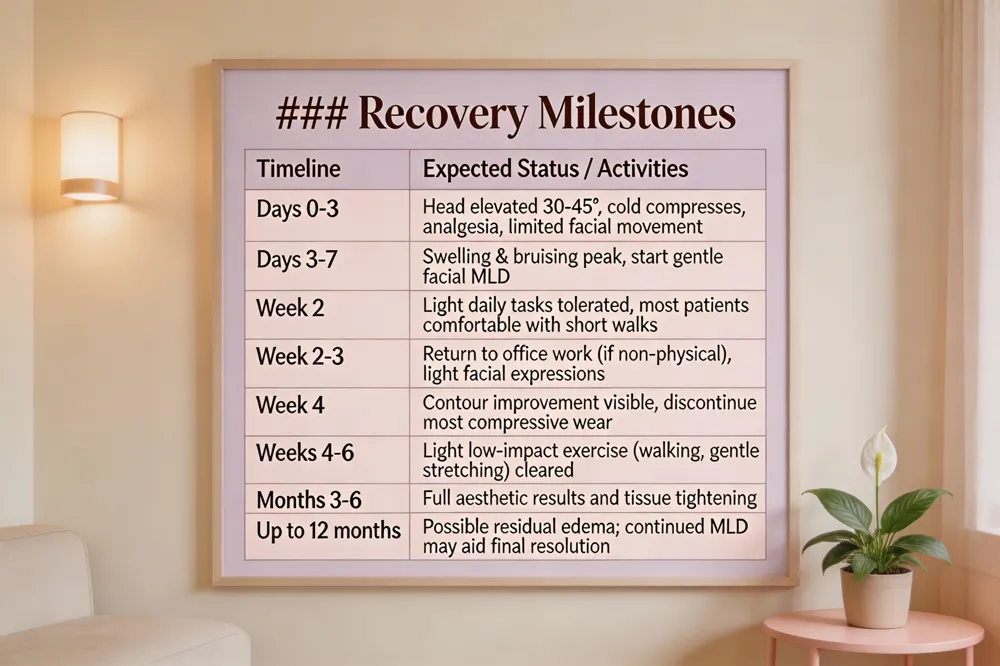
Facelift and Necklift Recovery Roadmap
Light daily tasks are tolerable by the end of week 2; patients resume work or exercise within 2–3 weeks. Swelling and bruising peak around days 3‑4 and then subside; contour improvement appears by week 4. [Full aesthetic results] and tightness typically emerge between 3 and 6 months, with edema possibly lasting up to a year.
How can I speed up recovery after a facelift? [Elevate the head] and apply [cold compresses for the first 48‑72 hours], stay hydrated, and eat anti‑inflammatory foods. Begin facial lymphatic drainage massage, avoid heavy lifting, smoking, and sun exposure, and rest with head propped. Sessions at Pink & Fancy can further accelerate healing.
What should I expect if swelling persists two months after a facelift? Mild puffiness, especially around jawline, is normal but should be decreasing. Continue head elevation, diet, facial exercises, and lymphatic massage. If swelling feels firm, painful, or is accompanied by fever or redness, contact your surgeon.
Special Considerations for Specific Populations
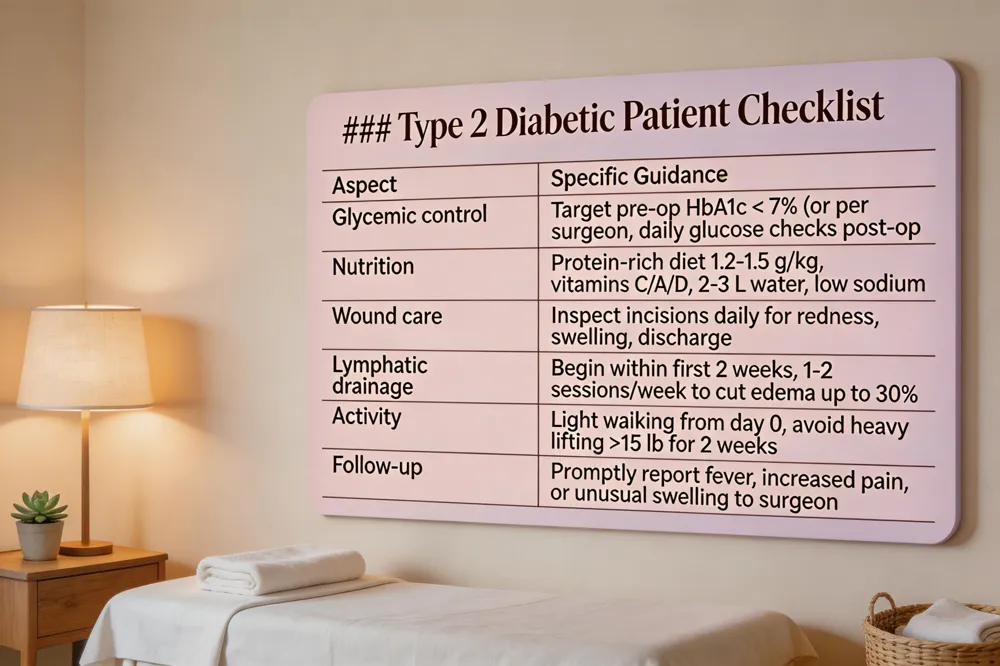
Yes, type 2 diabetics can have plastic surgery, but success hinges on tight glycemic control before, during, and after the operation. Maintaining blood‑glucose levels within target ranges reduces infection risk, promotes optimal wound healing, and shortens overall recovery. A balanced, protein‑rich diet with plenty of vitamins C, A, and D supports collagen synthesis, while adequate hydration (2–3 L daily) helps lymphatic flow. Post‑op monitoring should include daily glucose checks, incision inspection, and prompt reporting of any redness, fever, or excess swelling. Incorporating professional lymphatic drainage massage within the first two weeks can cut edema by up to 30 % and accelerate tissue repair. Most soft‑tissue procedures show noticeable improvement in 2–4 weeks, but full tissue remodeling may take 3–12 months; patients typically resume light activities by week 2–3 and normal routines by 2–3 weeks. With personalized care, disciplined nutrition, and targeted lymphatic therapy, type 2 can achieve safe, satisfying cosmetic outcomes.
Procedure‑Specific Downtimes
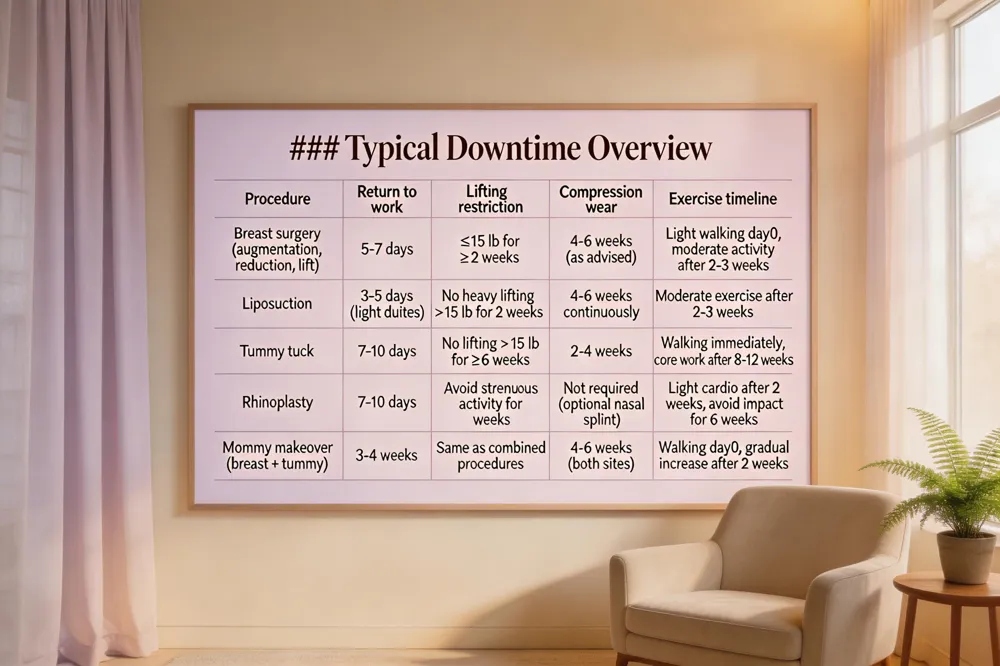
Recovery after cosmetic surgery varies by the type of procedure and the individual’s health.
Breast surgery downtime – After augmentation, reduction, or lift, most patients feel ready to return to work within 5‑7 days , but they should avoid lifting more than 15 lb for at least 2 weeks and limit arm movement for 1‑2 weeks. Full shoulder range of motion typically returns by 4‑6 weeks, and heavy exercise is postponed until 4‑6 weeks.
Liposuction recovery – Light walking can begin the day of surgery, and many patients resume normal activities within a week . Compression garments are worn continuously for 4‑6 weeks to control edema, while moderate exercise is usually safe after 2‑3 weeks. Swelling peaks in the first 2‑3 days and gradually subsides over 3‑6 months.
Tummy tuck timeline – Patients often need 7‑10 days off work, wear a compression garment for 2‑4 weeks, and avoid heavy lifting for at least six weeks. Gentle walking is encouraged immediately; core exercises are delayed until 8‑12 weeks. Full contour results become apparent around 3‑4 months.
Rhinoplasty healing – Most individuals return to work in 7‑10 days . Facial bruising and congestion may linger another 1‑2 weeks , while the final nasal shape continues to refine for 12‑18 months.
Mommy makeover schedule – Combining breast work with a tummy tuck (and sometimes liposuction) typically requires 3‑4 weeks before patients feel comfortable moving around and returning to work due to widespread swelling, bruising, and soreness. Full recovery and final results may take 6‑12 months.
These timelines emphasize gentle activity, proper compression, hydration, protein‑rich nutrition, and, when appropriate, lymphatic drainage massage to accelerate swelling reduction and support tissue healing.
Optimizing Long‑Term Results
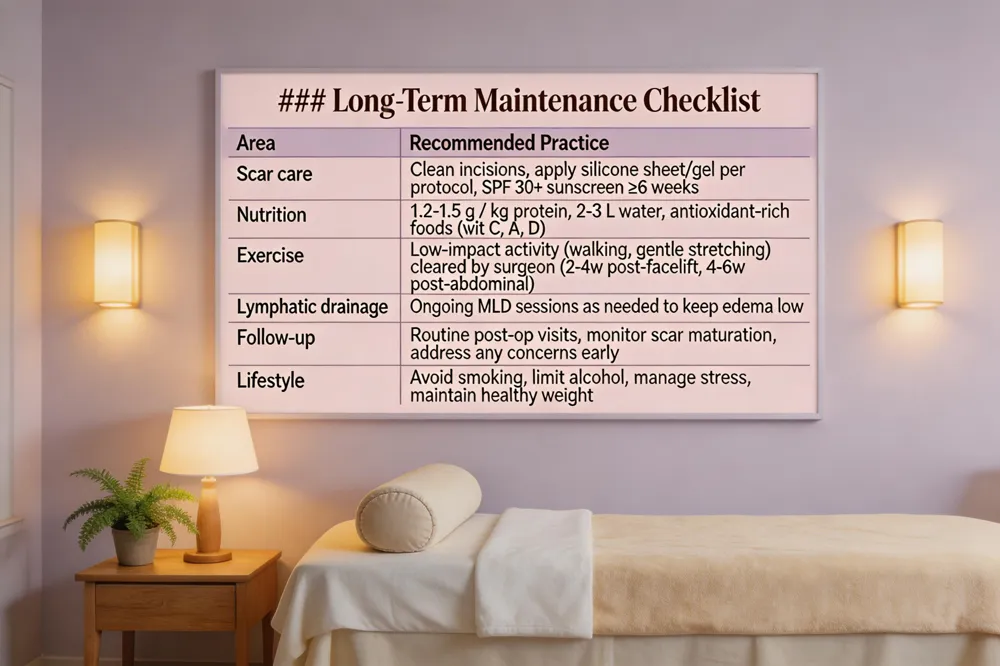
Long‑term success after cosmetic surgery hinges on diligent scar care, sun protection, ongoing maintenance, mindful exercise, and proper nutrition.
scarcare, follow your surgeon’s protocol: keep incisions clean, apply silicone‑based sheets or gel as directed, and protect the area with a broad‑spectrum SPF 30+ sunscreen for at least six weeks to prevent hyperpigmentation and scar thickening.
Regular, low‑impact exercise (e.g., walking, gentle stretching) can resume once the surgeon clears you—typically 2‑4 weeks after a facelift or 4‑6 weeks after abdominal work—to promote circulation without stressing healing tissues.
Nutrition plays a pivotal role; aim for 1.2‑1.5 g of protein per kilogram of body weight daily, stay hydrated (2‑3 L water), and include antioxidant‑rich foods (vitamins C, A, D) to support collagen synthesis and reduce inflammation.
Finally, schedule routine follow‑up visits and consider lymphatic drainage massage to keep edema low and maintain the refined results you achieved.
Putting It All Together
Key takeaways: Most cosmetic surgeries follow a predictable timeline—initial swelling peaks within three days, bruising fades by two weeks, and full tissue healing may extend to six months. Light activity can often resume within a week, but heavy lifting and vigorous exercise should be delayed according to the surgeon’s guidelines.
Personalized recovery plan: Start with gentle walking and head‑elevation, wear compression garments as prescribed, stay hydrated, and consume protein‑rich meals. Incorporate lymphatic drainage massage in the first two weeks to accelerate fluid removal, reduce edema, and support immune function. Adjust activity levels weekly based on pain, swelling, and incision comfort.
Pink & Fancy services: The boutique offers board‑certified lymphatic therapists, compression garments, and after‑care coaching that blends medical guidance with wellness techniques tailored for women.
Next steps: Schedule a follow‑up visit, confirm your massage schedule, and keep a log of swelling, pain, and mobility to guide adjustments.